

Clan Logan and Clan MacLennan: Similarities, Differences, and Their Place in Scottish Clan History
When researching Clan Logan history, one question that occasionally arises is whether there is a connection between Clan Logan and Clan MacLennan. The answer is both simple and complicated. While the two clans share certain traditions and historical associations, they remain separate clans with distinct identities. Sharing similarities with another clan does not diminish the unique history and heritage of either clan.
Understanding these similarities and differences helps us better appreciate Scottish heritage and the rich history surrounding both clans.
Shared Traditions in the Highlands
Among the many stories preserved in Scottish clan history are traditions linking the Highland Logans of Drumderfit in Ross-shire with Clan MacLennan. Various accounts describe events that may have brought the two families together centuries ago. Readers interested in the MacLennan perspective can also explore the history section on the official Clan MacLennan Worldwide website.
According to legend, Gilliegorm Logan was killed in a skirmish against the Frasers (or MacRaes) at Drumderfit/Kessock around 1372. His captured, pregnant widow gave birth to a son with a deformed back, who was named Crotair or Crotach ("crooked back"). He became a Celtic monk, and his son was named Gille Fhinnein ("follower of St. Finnan"), from whom the MacLennan name derives.
Because many Highland traditions were passed down orally before being written down, historians cannot verify every detail. Several versions of these stories exist, and surviving records from the medieval period are limited.
Some later clan historians and traditional accounts have suggested that Clan MacLennan may have descended from, or become associated with, a Highland branch of Clan Logan.
While this tradition is accepted by many members of both clans, the documentary evidence available today does not conclusively prove the relationship.
Like much of Scottish clan history, some questions remain unanswered.
Different Origins
Despite these traditional links, Clan Logan and Clan MacLennan developed independently and followed different historical paths.
Clan Logan
The history of Clan Logan includes both Lowland and Highland branches. The best-documented chiefly family is the Logans of Restalrig near Edinburgh, who rose to prominence during the Middle Ages and held lands throughout several parts of Scotland.
The Logan surname itself is generally believed to be territorial in origin, derived from places called Logan in southwestern Scotland. Over time, Logan families spread throughout Scotland and later to Ireland and many parts of the world.
Today, descendants researching Logan family history may discover ancestors from Scotland, Ireland, North America, Australia, New Zealand, and beyond.
Clan MacLennan
Clan MacLennan is traditionally considered a Highland clan. Its Gaelic name, Mac Gille Fhinnein, means "son of the follower of St. Finnan." The clan's history centers largely around Kintail, Glenshiel, and Ross-shire in the northwest Highlands.
Unlike the territorial origins associated with the Logan surname, the MacLennan name reflects a patronymic and religious origin.
Geographic Differences
Although both clans have historical ties to Ross-shire, their principal areas differed.
Clan Logan
Ayrshire
Restalrig near Edinburgh
Later branches in Ross-shire
Clan MacLennan
Kintail
Glenshiel
Northwest Ross-shire
These regional differences helped shape the unique identity and traditions of each clan.
Tartans and Modern Associations
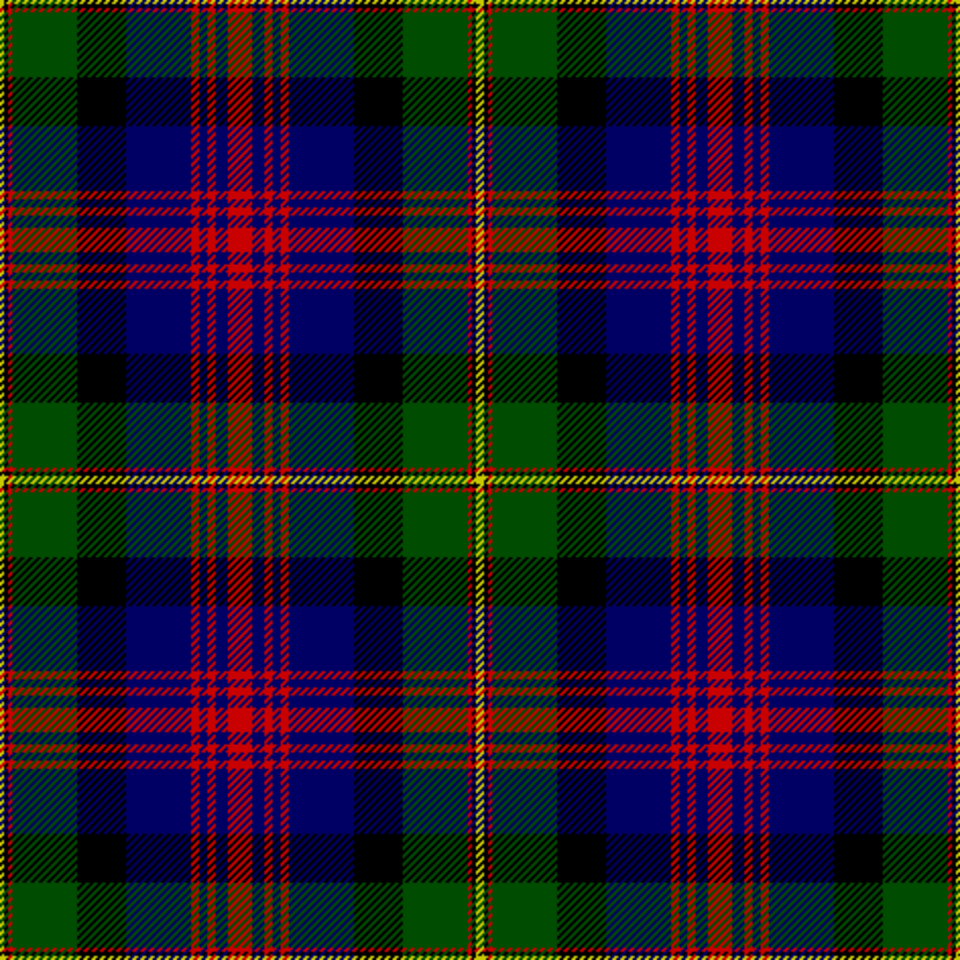
Clan Logan and Clan MacLennan are associated with the same tartan pattern today. However, modern clan tartans largely developed during the nineteenth century and should not be viewed as proof of medieval relationships.
Instead, tartans reflect later clan traditions and modern associations that evolved during Scotland's revival of interest in clan heritage.
Logan or MacLennan tartan, as recorded by James Logan in 1831. Modern thread count: Y4 Bk2 R2 G32 Bk24 B32 R4 B4 R4 B6 R12.
Clan Logan and Clan MacLennan: Two Distinct Clans with a Fascinating Connection
For those interested in Clan Logan genealogy and Scottish heritage, the relationship between Clan Logan and Clan MacLennan offers an intriguing example of how tradition and documented history can intersect.
While traditions suggest links between the Highland Logans and Clan MacLennan, both clans maintain their own histories, identities, and legacies.
The available evidence does not allow historians to prove every aspect of their early relationship. What we can say with confidence is that both clans have made lasting contributions to Scotland's history and continue to preserve their heritage for future generations.
As researchers continue studying Clan Logan history and Logan family history, new discoveries may help answer questions that have remained mysteries for centuries.
Modern Chiefship and Legal Status
In contemporary Scotland, the most significant difference between the two families lies in their official standing with the Court of the Lord Lyon (Scotland's heraldic authority). While they share a legendary past, their modern legal structures are entirely different.
Clan MacLennan (An Active Chiefship): After more than three centuries without an official leader following their heavy losses at the Battle of Auldearn in 1645, the chiefship was formally revived. In 1977, Ronald George MacLennan was recognized as the Chief of the Name and Arms of MacLennan. Upon his passing in 1989, his son, Ruairidh Donald George MacLennan of MacLennan, inherited the title at just 12 years old, making him the youngest clan chief in the world at the time. Clan MacLennan remains an active global entity under his leadership today.
Clan Logan (An Armigerous Clan): Clan Logan is currently classified as an armigerous clan, meaning it possesses registered heraldic arms but presently has no chief recognized by the Court of the Lord Lyon. The prominent cadet branch of Restalrig came to a dramatic end in the early seventeenth century. Sir Robert Logan was posthumously found guilty of treason for his alleged role in the Gowrie Conspiracy of 1600 against King James VI, resulting in the forfeiture of the family's historic lands, titles, and status.
Today, efforts continue to restore the chiefship of Clan Logan. Until a Chief is recognized, J. Kevin Logan serves as Commander of the Name Logan. He received his Commission from the Court of the Lord Lyon and represents Logans worldwide while the search for a Chief continues.
Hoc Majorum Virtus
Sources
Clan Logan Society International. "Clan Logan & Family History." https://www.clanlogansociety.org/
Clan MacLennan Worldwide. "History of Clan MacLennan." https://www.clanmaclennan-worldwide.com/history/
Clan Logan. Wikipedia. https://en.wikipedia.org/wiki/Clan_Logan
Clan MacLennan. Wikipedia. https://en.wikipedia.org/wiki/Clan_MacLennan
McIan, R. R. The Clans of the Scottish Highlands. London: Ackermann, 1845.
Bain, Robert. The Clans and Tartans of Scotland. London and Glasgow: Fontana, 1983.


Comments